

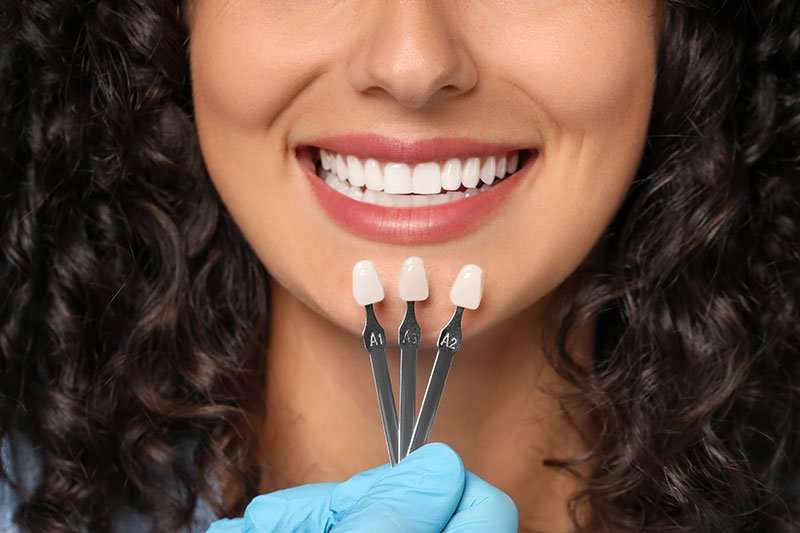
Dental veneers are a cosmetic dentistry treatment option that one can receive, changing the appearance of the visible surfaces of the teeth. Adults may look into this procedure when the color, shape, or alignment of their front teeth does not respond to whitening or other conservative approaches. Traditional veneers often involve a permanent change to the natural tooth structure, so understanding how they work can help you make a well-informed decision.
What Are Veneers?
Veneers are thin, custom-made shells, bonded to the front surface of a tooth by a dentist. They cover the visible portion of the tooth, and they can alter its color, size, shape, or length. Dentists typically place veneers on the teeth that show most when a person smiles or speaks.
Porcelain veneers are crafted by a dental laboratory from a ceramic material that resists staining; it reflects light in a way that closely resembles natural enamel. Composite resin veneers are sculpted directly onto the tooth by your dentist using a tooth-colored material. Each material differs in durability, appearance, and maintenance requirements. Your dentist can walk you through how these factors apply to your specific situation, helping you make an informed decision.
What Do They Address?
Veneers are a cosmetic treatment. They change how teeth look, and they are not used to treat underlying dental disease. Common concerns that veneers may address vary, including:
- Discoloration: Stains from coffee, tea, tobacco, certain medications, or prior dental work that do not lighten with whitening
- Chips and Minor Fractures: Small areas of damage along the edges of the teeth
- Shape or Size That Is Uneven: Teeth that appear worn, short, pointed, or irregular
- Gaps: Small spaces between neighboring teeth
- Misalignment: Slight irregularities in position that a patient prefers not to correct with orthodontics
Veneers are not suitable in every case, and a dentist can evaluate the health of the teeth and gums before recommending them. Active decay, gum disease, or limited enamel may need attention first.
What Does the Process Involve?
Porcelain veneers are generally placed over several visits. Composite veneers follow a shorter process, since the resin is often applied and shaped directly on the tooth in one visit. The steps below outline a typical sequence, but each dental office may follow its own approach:
- Evaluation: The dentist examines your teeth and gums and discusses your goals.
- Treatment Planning: Some dentists use imaging to preview the proposed result.
- Tooth Preparation: For traditional porcelain veneers, the dentist removes a thin layer of enamel from the front of each tooth to make room for the veneer.
- Impressions and Temporaries: The dentist takes an impression of the prepared teeth, and a laboratory uses it to fabricate the veneers; temporary veneers may be placed in the meantime.
- Bonding: At the final appointment, the dentist checks the fit and color of each veneer, makes adjustments, and bonds it to the tooth with a dental adhesive.
- Follow-up: A brief follow-up visit may be scheduled to assess the fit and how your bite feels.
You can prepare for treatment by completing any outstanding dental care, such as cleanings or fillings, beforehand.
Confer With Your Dentist
Your dentist may review whether veneers or another cosmetic option aligns with your oral health and personal goals. A discussion about expected longevity, as well as maintenance needs, can help you reach a decision that suits your needs. Veneers do not last indefinitely, and replacement may eventually be necessary.