

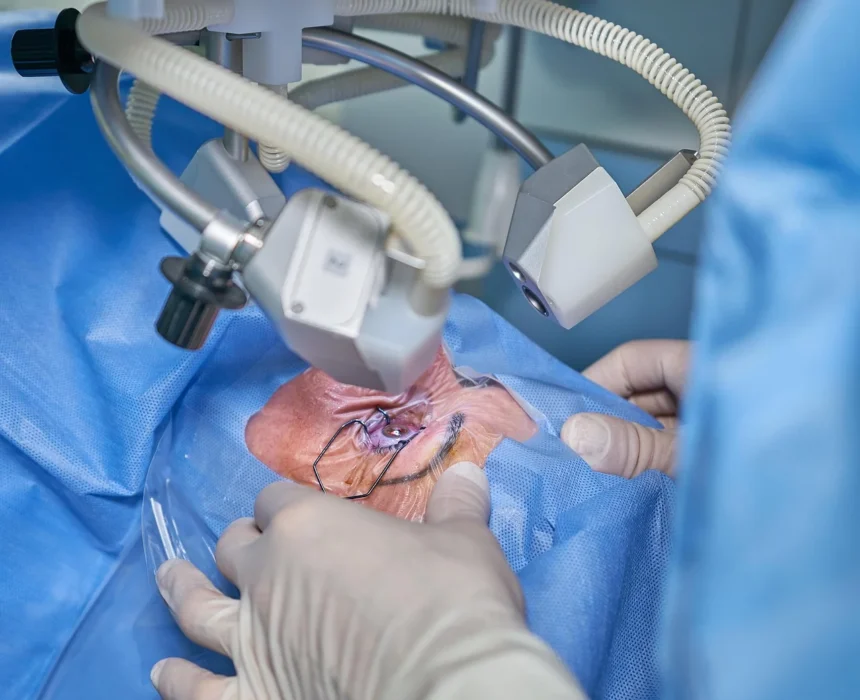
Glasses and contact lenses correct refractive errors, but they also require regular use and maintenance. Laser eye surgery corrects certain vision prescriptions by using a laser to reshape the cornea. Suitability for this procedure depends on individual eye health and prescription details. Here are a few of the benefits of choosing laser eye surgery over glasses or contacts:
Reduce Lens Dependence
Glasses require regular handling throughout the day, and contact lenses involve insertion, removal, and cleaning. LASIK offers an alternative for people who want vision correction without relying on lenses during every activity. The procedure reshapes the cornea so incoming light focuses more precisely on the retina.
Eyewear also influences how people approach certain activities. Someone who wears glasses often reaches for them before reading, driving, or moving around the house, while contact lens users follow a routine for inserting and removing their lenses. Laser vision correction addresses the underlying prescription rather than requiring lenses for daily vision correction.
Reduced reliance on glasses or contacts also changes how people manage activities involving protective equipment. Glasses sometimes interfere with safety equipment, and contact lenses require additional care in certain environments. A LASIK evaluation examines the prescription and overall eye health before determining whether surgical correction is appropriate.
Correct More Prescriptions
Laser eye surgery treats several common refractive errors, including nearsightedness, farsightedness, and astigmatism. The type and severity of the prescription influence how the procedure is planned. Because each eye has different measurements, the surgeon evaluates factors such as corneal shape, thickness, and prescription strength before recommending treatment. These measurements provide the information needed to determine whether the eyes meet the criteria for laser vision correction.
Prescription strength also influences the amount of corneal reshaping required during LASIK, and the treatment plan reflects the measurements recorded during the eye examination. A comprehensive preoperative assessment identifies the characteristics of the eyes before surgery. The surgeon reviews the findings alongside the patient’s prescription to select an appropriate treatment approach.
Access Surgical Expertise
LASIK is one of several services available through an eye specialty clinic, alongside treatments for conditions such as cataracts and corneal disorders. Having these services within the same practice gives patients access to different areas of eye care as their needs change. The clinic’s approach also involves coordinating diagnostic testing, treatment planning, and follow-up care around the patient’s specific circumstances.
- Specialized testing: Diagnostic technology provides information used throughout the patient’s care, from the initial consultation through follow-up appointments.
- Treatment planning: Eye specialists use examination findings to discuss available treatment options and develop an approach suited to the patient’s needs.
- Ongoing care: Follow-up appointments allow the provider to monitor healing and address questions or concerns after treatment.
Recover Vision Quickly
LASIK involves a recovery period that differs from the daily routine required for glasses or contact lenses. Although recovery times vary between patients, the surgeon provides specific instructions based on the individual’s procedure and eye health. Understanding the expected recovery timeline also helps patients organize work, transportation, and other responsibilities around their treatment. Someone who spends most of the workday at a computer might need to adjust screen time during the initial recovery period; a person who drives for work needs to follow restrictions before returning behind the wheel. Patients should resume specific activities according to their surgeon’s postoperative instructions.
Learn More About Laser Eye Surgery
Glasses and contact lenses remain common options for correcting refractive errors, while laser eye surgery offers another option for eligible patients. The right choice depends on factors such as your prescription, eye health, recovery needs, and daily activities. Because every patient has different eyes and vision needs, an eye-care professional must evaluate whether laser correction is appropriate. Schedule an eye-care consultation to discuss your vision correction options.