

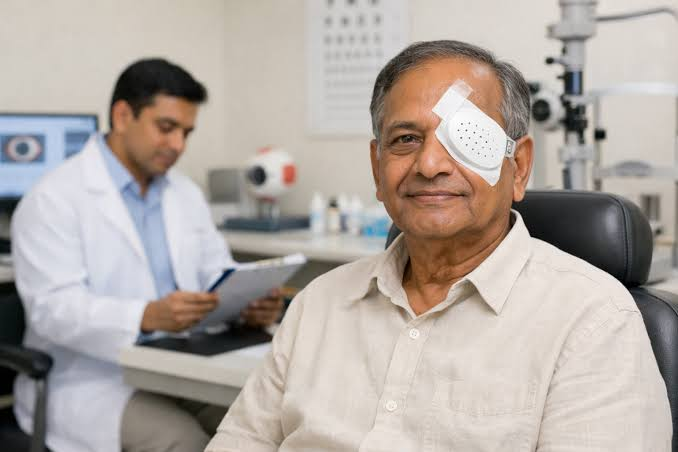
Cataract surgery is one of the most common and successful eye procedures in the world. It helps restore clear vision by removing the cloudy lens from the eye and replacing it with a clear artificial lens. Even though the surgery itself is quick and usually painless, the recovery process is very important for proper healing and the best visual results.
- What Happens After Cataract Surgery?
- First 24 to 48 Hours After Surgery
- 1. Rest your eyes
- 2. Do not touch your eye
- 3. Wear protective glasses
- 4. Use eye drops properly
- 5. Avoid water in the eye
- First Week of Recovery
- One to Four Weeks After Surgery
- Full Recovery Timeline
- Important Eye Care Tips After Cataract Surgery
- 1. Follow medication schedule
- 2. Protect your eyes outdoors
- 3. Sleep carefully
- 4. Maintain hygiene
- 5. Avoid eye strain
- Warning Signs You Should Not Ignore
- Lifestyle Tips for Faster Recovery
- Emotional Side of Recovery
- Long-Term Care After Cataract Surgery
- Conclusion
- FAQs
This cataract surgery recovery guide will help you understand what happens after surgery, how to take care of your eyes, what to expect during healing, and how to avoid complications. Everything is explained in simple and easy language so anyone can follow it.
What Happens After Cataract Surgery?
Right after cataract surgery, your eye may feel a little uncomfortable, blurry, or sensitive to light. This is completely normal. The eye needs time to adjust and heal after the cloudy lens is removed.
Most people go home the same day of surgery. You will usually be given an eye shield or protective glasses to prevent accidental rubbing or pressure on the eye.
Doctors also prescribe eye drops to prevent infection, reduce swelling, and help the healing process.
In the first few hours after surgery, you may notice:
- Mild irritation or itching
- Slight redness in the eye
- Blurry vision
- Watery eyes
- Sensitivity to light
These symptoms usually improve within a few days.
First 24 to 48 Hours After Surgery
The first two days are very important for recovery. During this time, your eye is very sensitive and needs extra care.
Here are some important things to do:
1. Rest your eyes
Avoid reading, watching TV for long hours, or using mobile screens too much.
2. Do not touch your eye
Even if it feels itchy, do not rub or press it. This can damage the healing area.
3. Wear protective glasses
Your doctor may give you a shield to wear while sleeping so you do not accidentally touch your eye.
4. Use eye drops properly
Follow the prescription exactly. Do not miss doses.
5. Avoid water in the eye
Try not to let soap, shampoo, or dirty water enter your eye while washing your face.
First Week of Recovery
During the first week, your vision slowly starts improving. Many people notice clearer sight within a few days, but full healing takes time.
What is normal in the first week?
- Mild blurred vision
- Slight glare from lights
- Dry or watery eyes
- Feeling of something in the eye
What should you avoid?
- Heavy lifting
- Bending down too much
- Swimming or hot baths
- Eye makeup
- Dusty or smoky environments
It is important to protect your eye from infection during this stage.
One to Four Weeks After Surgery
This is the stage where most healing happens. Your vision becomes clearer and more stable.
Improvements you may notice:
- Sharper vision
- Better color brightness
- Reduced glare
- Less eye discomfort
You may still need to use eye drops, but the frequency may reduce over time.
During this stage:
- You can slowly return to normal daily activities
- You can read, watch TV, and use your phone in moderation
- Light exercise like walking is usually allowed
However, avoid intense physical activity unless your doctor approves.
Full Recovery Timeline
Most people fully recover from cataract surgery within 4 to 6 weeks. However, vision may continue to adjust slightly for a few months.
Healing depends on several factors:
- Age
- Overall health
- Eye condition before surgery
- Following doctor’s instructions
People who take proper care usually recover faster and experience better results.
Important Eye Care Tips After Cataract Surgery
Taking care of your eyes properly can make a big difference in recovery. Here are some simple but important tips:
1. Follow medication schedule
Eye drops are very important. They prevent infection and reduce inflammation. Missing doses can slow healing.
2. Protect your eyes outdoors
Wear sunglasses when going outside to protect your eyes from dust, sunlight, and wind.
3. Sleep carefully
Try to sleep on your back or on the opposite side of the operated eye.
4. Maintain hygiene
Wash your hands before touching anything near your eyes.
5. Avoid eye strain
Do not overuse screens in the early days.
Warning Signs You Should Not Ignore
Although cataract surgery is very safe, it is important to watch for unusual symptoms. Contact your doctor immediately if you notice:
- Severe eye pain
- Sudden loss of vision
- Increasing redness
- Thick discharge from the eye
- Flashing lights or many new floaters
- Swelling that gets worse
These signs are rare but need quick medical attention.
Lifestyle Tips for Faster Recovery
Your daily habits also affect how fast your eye heals.
Eat healthy food
Include foods rich in vitamins A, C, and E. Green vegetables, carrots, and fruits help eye health.
Stay hydrated
Drinking enough water helps reduce dryness in the eyes.
Avoid smoking and alcohol
These can slow down healing and increase risk of complications.
Get enough sleep
Good sleep helps the body repair itself faster.
Emotional Side of Recovery
Many people feel anxious after eye surgery, especially when vision is blurry at first. This is normal. Vision usually improves gradually, not instantly.
It is important to stay calm and patient. Most patients feel much better within a few days once healing begins.
Talking to your doctor if you feel worried can also help reduce stress.
Long-Term Care After Cataract Surgery
Even after full recovery, you should continue taking care of your eyes:
- Get regular eye check-ups
- Wear sunglasses in bright sunlight
- Maintain healthy diet
- Avoid eye injuries
Some people may develop a condition called “posterior capsule opacity” months or years after surgery, which can be treated easily with a laser procedure if needed.
Conclusion
Cataract surgery is a safe and highly effective way to restore clear vision. However, proper recovery care is just as important as the surgery itself. By following your doctor’s instructions, using eye drops correctly, protecting your eyes, and avoiding risky activities, you can heal faster and enjoy better vision results.
This cataract surgery recovery guide shows that recovery is simple when you take it step by step. Most people return to normal life quickly and enjoy a big improvement in their quality of vision.
Patience, care, and regular follow-up are the keys to a smooth recovery.
FAQs
1. How long does it take to recover from cataract surgery?
Most people recover within 4 to 6 weeks, but vision improves within a few days.
2. Is cataract surgery painful?
No, the surgery is usually painless. You may feel mild discomfort during recovery.
3. Can I watch TV or use my phone after surgery?
Yes, but limit screen time in the first few days to avoid eye strain.
4. When can I drive after cataract surgery?
Usually after 1 to 2 weeks, but only when your doctor confirms your vision is stable.
5. What should I avoid after cataract surgery?
Avoid rubbing your eye, heavy lifting, swimming, and dusty environments during early recovery.