
Introduction
Many people think food allergies only affect children, but adults can develop food allergies at any age. In some cases, a person may eat a certain food for years without any problems and suddenly begin experiencing allergic reactions. Knowing the food allergy symptoms in adults is important because some reactions can become serious and even life-threatening if they are not treated quickly.
- Introduction
- 1. Skin Reactions
- 2. Mouth and Throat Symptoms
- 3. Digestive Symptoms
- 4. Breathing Problems
- 5. Eye Symptoms
- 6. Nose Symptoms
- 7. Severe Allergic Reaction (Anaphylaxis)
- Changes in the Immune System
- Family History
- Environmental Factors
- Cross-Reactivity
- Medical History
- Skin Prick Test
- Blood Test
- Food Challenge
- Avoid Trigger Foods
- Antihistamines
- Epinephrine
- 1. Can adults develop food allergies even if they never had them before?
- 2. What is the most common food allergy in adults?
- 3. How quickly do food allergy symptoms appear?
- 4. Can a food allergy go away on its own?
- 5. What should I do if I experience severe food allergy symptoms?
Food allergies happen when the body’s immune system mistakenly identifies a harmless food as dangerous. As a result, the immune system releases chemicals like histamine, causing a wide range of symptoms.
In this guide, you will learn about the common symptoms, causes, risk factors, diagnosis, treatment options, prevention tips, and when to seek emergency medical care.
What Is a Food Allergy?
A food allergy is an immune system reaction that occurs shortly after eating a specific food. Even a very small amount of the food can trigger symptoms.
It is important to understand that a food allergy is different from a food intolerance. Food intolerance may cause stomach discomfort, but it does not involve the immune system and is usually not life-threatening.
Common foods that cause allergies include:
- Peanuts
- Tree nuts
- Milk
- Eggs
- Fish
- Shellfish
- Soy
- Wheat
- Sesame
Some adults may also become allergic to fruits, vegetables, or spices.
Common Food Allergy Symptoms in Adults
Food allergy symptoms can appear within a few minutes or up to two hours after eating the trigger food. Symptoms may be mild, moderate, or severe.
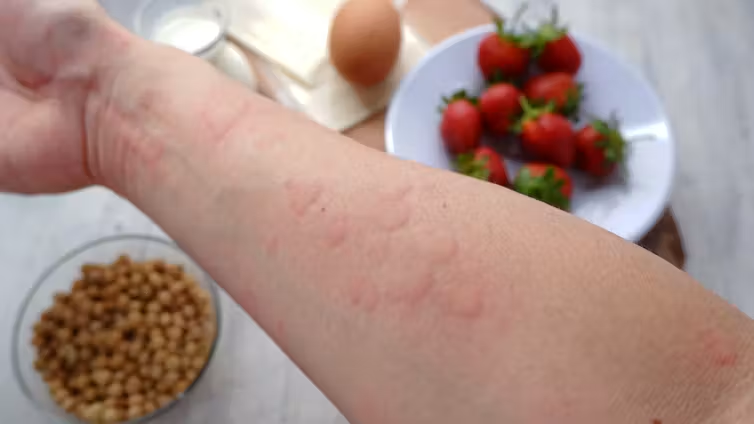
1. Skin Reactions
The skin is often the first place where allergy symptoms appear.
Common skin symptoms include:
- Itchy skin
- Red rash
- Hives
- Swelling of the lips
- Swelling of the face
- Swollen eyelids
- Eczema flare-ups
These symptoms may appear suddenly and spread quickly.
2. Mouth and Throat Symptoms
Many adults notice unusual feelings inside the mouth shortly after eating.
Symptoms include:
- Tingling lips
- Itchy mouth
- Swollen tongue
- Swollen throat
- Difficulty swallowing
A swollen throat should never be ignored because it can block breathing.
3. Digestive Symptoms
Food allergies often affect the digestive system.
Common stomach-related symptoms include:
- Nausea
- Vomiting
- Stomach cramps
- Diarrhea
- Abdominal pain
- Bloating
These symptoms are sometimes mistaken for food poisoning or stomach infections.
4. Breathing Problems
Some allergic reactions affect the lungs and airways.
Signs include:
- Wheezing
- Shortness of breath
- Persistent coughing
- Chest tightness
- Trouble breathing
Breathing difficulties require immediate medical attention.
5. Eye Symptoms
Food allergies may also affect the eyes.
Symptoms include:
- Watery eyes
- Itchy eyes
- Red eyes
- Swollen eyelids
6. Nose Symptoms
Many adults experience allergy symptoms that resemble a cold.
These include:
- Sneezing
- Runny nose
- Nasal congestion
- Itchy nose
7. Severe Allergic Reaction (Anaphylaxis)
The most dangerous food allergy reaction is called anaphylaxis.
Symptoms include:
- Difficulty breathing
- Swelling of the throat
- Fast heartbeat
- Dizziness
- Fainting
- Low blood pressure
- Confusion
- Loss of consciousness
Anaphylaxis is a medical emergency. If someone develops these symptoms after eating, call emergency medical services immediately and use an epinephrine auto-injector if available.
Why Do Adults Suddenly Develop Food Allergies?
Many people wonder why they suddenly become allergic later in life.
Possible reasons include:
Changes in the Immune System
As we age, our immune system changes, increasing the risk of allergies.
Family History
Having close family members with allergies, asthma, or eczema increases your risk.
Environmental Factors
Pollution, infections, and lifestyle changes may influence allergy development.
Cross-Reactivity
People with pollen allergies sometimes develop reactions to fruits or vegetables because the proteins are similar.
Most Common Food Allergies in Adults
Although anyone can become allergic to almost any food, these are the most common:
- Shellfish
- Shrimp
- Crab
- Lobster
- Fish
- Peanuts
- Tree nuts
- Sesame
- Wheat
- Soy
Shellfish allergy is one of the most common adult-onset food allergies.
Risk Factors
Some people are more likely to develop food allergies.
Risk factors include:
- Family history of allergies
- Asthma
- Eczema
- Other allergic conditions
- Previous allergic reactions
- Existing pollen allergies
How Are Food Allergies Diagnosed?
Doctors use several methods to diagnose food allergies.
Medical History
Your doctor will ask:
- What food did you eat?
- How long after eating did symptoms begin?
- How severe were the symptoms?
- Have you reacted before?
Skin Prick Test
A tiny amount of the suspected allergen is placed on the skin to check for a reaction.
Blood Test
Blood tests measure allergy antibodies known as IgE.
Food Challenge
In some cases, doctors carefully supervise eating small amounts of the suspected food to confirm the allergy.
Treatment for Food Allergies
There is currently no cure for food allergies, but symptoms can be managed.
Avoid Trigger Foods
The safest treatment is avoiding foods that cause reactions.
Always:
- Read food labels
- Ask about ingredients when eating out
- Inform family and friends
Antihistamines
Mild allergic reactions may improve with antihistamine medication.
These medicines help reduce:
- Itching
- Hives
- Sneezing
- Mild swelling
Epinephrine
People with severe allergies should carry an epinephrine auto-injector at all times.
It is the first treatment for anaphylaxis and can save lives.
Tips to Prevent Food Allergy Reactions
Prevention is the best way to stay safe.
Helpful tips include:
- Read ingredient labels carefully.
- Avoid cross-contamination in the kitchen.
- Tell restaurant staff about your allergy.
- Carry emergency medication.
- Wear a medical alert bracelet if you have severe allergies.
- Teach family members how to recognize allergic reactions.
When Should You See a Doctor?
You should speak with a healthcare provider if you experience:
- Repeated reactions after eating
- Swelling of the lips or tongue
- Difficulty breathing
- Severe stomach pain after meals
- Frequent unexplained rashes
Never ignore symptoms that seem to worsen over time.
Living with Food Allergies
Living with food allergies can seem challenging at first, but many adults successfully manage them every day.
Simple habits can make life easier:
- Plan meals ahead.
- Keep safe snacks with you.
- Learn to recognize ingredient names.
- Educate friends and coworkers.
- Follow your doctor’s advice.
With good planning, most people continue to enjoy an active and healthy lifestyle.
Conclusion
Recognizing food allergy symptoms in adults is essential for protecting your health. Symptoms can range from mild itching and stomach discomfort to life-threatening anaphylaxis. Early diagnosis, avoiding trigger foods, reading labels carefully, and carrying emergency medication when needed can greatly reduce the risk of serious reactions.
If you notice symptoms after eating certain foods, do not ignore them. Consult a healthcare professional for proper testing and guidance. Taking the right precautions allows you to live safely and confidently while managing food allergies.
Frequently Asked Questions (FAQs)
1. Can adults develop food allergies even if they never had them before?
Yes. Adults can develop food allergies at any age, even if they have eaten the food safely for many years.
2. What is the most common food allergy in adults?
Shellfish allergy is one of the most common food allergies that first appears during adulthood.
3. How quickly do food allergy symptoms appear?
Most symptoms begin within a few minutes to two hours after eating the trigger food.
4. Can a food allergy go away on its own?
Some childhood food allergies disappear over time, but adult food allergies are often lifelong and require careful management.
5. What should I do if I experience severe food allergy symptoms?
If you have trouble breathing, swelling of the throat, dizziness, or fainting after eating, use an epinephrine auto-injector if available and seek emergency medical care immediately.